If you’ve been holding off on a new phone because you were waiting to see what Samsung would do next with its foldables, the wait is over. The Samsung Galaxy Z Fold 8 is official, and it’s not just another yearly refresh — it’s the biggest change to the Galaxy Z Fold lineup since the series launched.
Samsung unveiled the new phone at its Galaxy Unpacked event in London, alongside a sibling model called the Galaxy Z Fold8 Ultra and the Galaxy Z Flip8. For anyone who’s used a Samsung Galaxy fold before, this launch is a little different than usual, because Samsung didn’t just release one big-screen foldable this year. It released two, with two distinct shapes, price points, and audiences in mind.
In this guide, we’ll walk through everything worth knowing about the Galaxy Z Fold 8: what it costs, when you can buy it, how the design has changed, what’s inside it, and how it stacks up against its Ultra sibling. By the end, you’ll know exactly whether this is the foldable to put your money down on.
Table of Contents
What Is the Samsung Galaxy Z Fold 8?
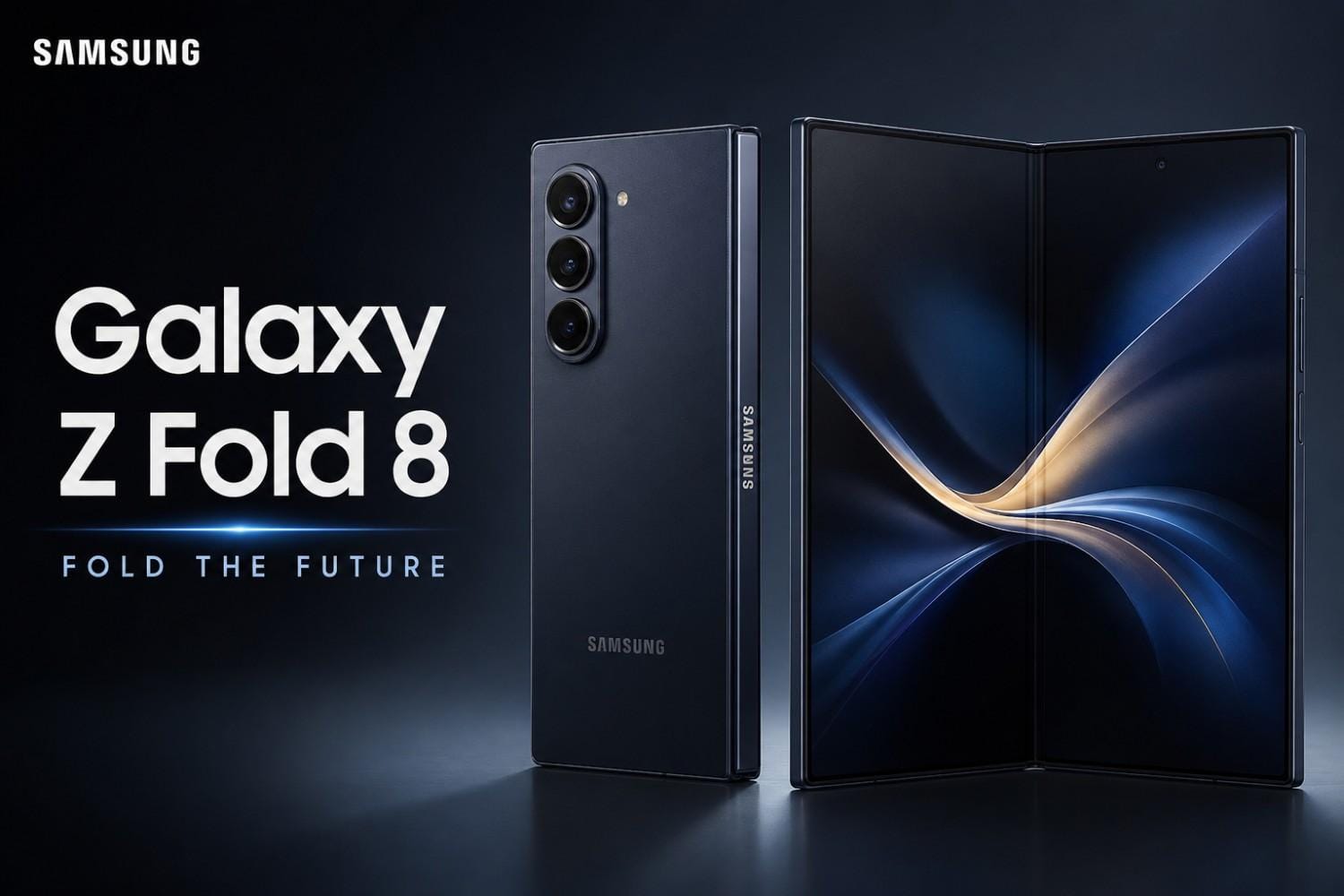
The Galaxy Z Fold 8 is Samsung’s newest large-screen foldable phone, and this year it comes with a genuinely new identity. Instead of the tall, narrow book-style shape that’s defined the Samsung Galaxy Fold series since its debut, the Z Fold 8 adopts a shorter, wider “passport-style” form factor. Samsung is positioning it as the more mainstream, more affordable option in its 2026 foldable lineup — while the Galaxy Z Fold8 Ultra carries on the familiar tall design that longtime Fold fans already know.
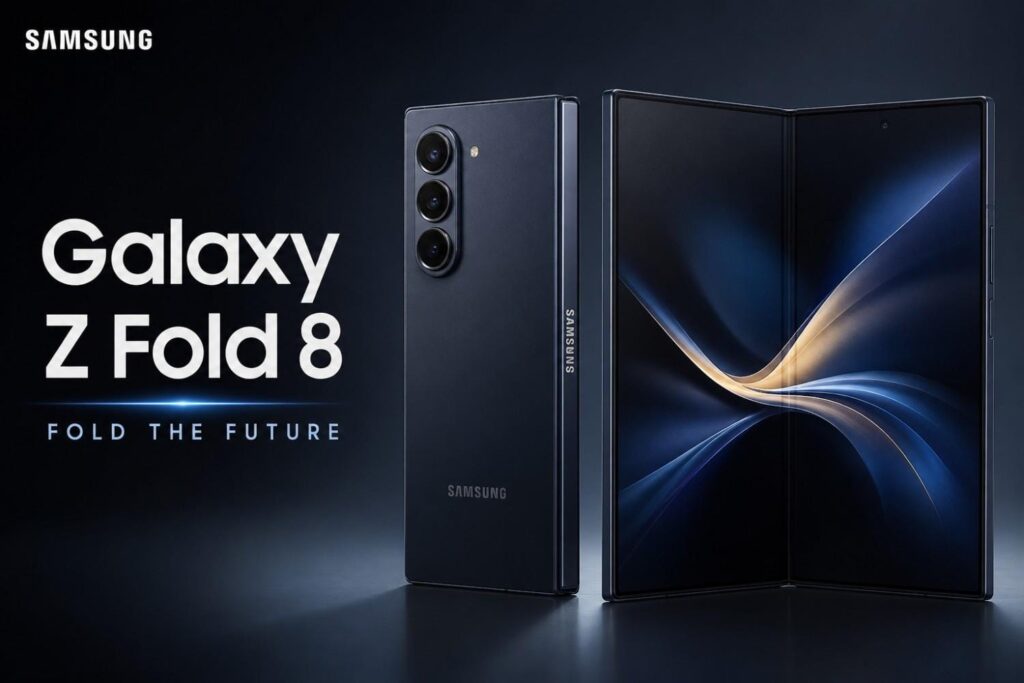
Think of it this way: the Galaxy Z Fold 8 is built for people who want a foldable that feels natural to hold and use one-handed on the cover screen, then opens into a genuinely tablet-like canvas for video, browsing, and multitasking. It’s also, according to Samsung, the lightest Galaxy Z Fold the company has ever made, which matters a lot for a device you’re expected to carry and use daily.
This dual-model strategy also lines up with the timing of Apple’s rumored entry into the foldable market, so Samsung clearly wanted a wider, roomier option ready to compete before the competition even shows up.
Samsung Galaxy Z Fold8 Ultra: The Familiar Shape
For anyone who prefers the classic look, the Galaxy Z Fold8 Ultra is the true successor to last year’s Z Fold 7. It keeps the tall, narrow profile, adds a bigger camera system, a larger battery, and commands a higher price. We’ll compare both models in detail later in this article.
Samsung Galaxy Z Fold 8 Release Date and Price
Samsung announced the Galaxy Z Fold 8 on July 22, 2026, at Galaxy Unpacked in London. Following Samsung’s usual rollout pattern, pre-orders opened the same day, with the phone reaching store shelves a couple of weeks later.
Here’s the pricing breakdown for the Galaxy Z Fold 8:
- 256GB storage: Starting around $1,899
- 512GB storage: A step up from the base price
- 1TB storage: The top-tier option, priced highest
For comparison, the Galaxy Z Fold8 Ultra starts about $200 higher, at roughly $2,099, which makes the standard Galaxy Z Fold 8 the more budget-conscious entry point into Samsung’s foldable lineup — though “budget” is relative when you’re still talking about a nearly $1,900 phone.
Rising memory chip costs pushed prices up industry-wide this year, so shoppers comparing this generation to the Z Fold 7 will notice a bump across the board. If you’re planning to buy, keep an eye on trade-in promotions through Samsung’s own store and major US carriers, since foldables typically come with some of the most generous trade-in credit of any phone category.
Design and Build: A New Look for the Samsung Galaxy Fold
This is where the Galaxy Z Fold 8 really breaks from tradition. Previous generations of the Samsung Galaxy Fold all shared a similar tall-and-narrow silhouette. The Z Fold 8 flips that formula, going shorter and wider both closed and open.
When folded, the phone uses a 10:16 cover screen ratio that Samsung designed specifically around quick, everyday interactions — checking messages, scrolling social feeds, and glancing at notifications. Unfold it, and you get a wider, shorter main display built for the way people actually consume content today: watching video, reading side-by-side documents, and running two apps at once without cramming everything into a tall, narrow strip.
Under the hood of the design, Samsung switched to a Flex Titanium hinge and frame system, which the company says helps make this the lightest Galaxy Z Fold to date while still holding up to daily folding and unfolding. The display itself uses a refined hinge mechanism aimed at reducing the visible crease that’s long been a sticking point for foldable phone skeptics.
Durability-wise, expect the usual Samsung foldable protections: a tough outer glass on the cover screen, an IP rating for dust and water resistance, and the kind of reinforced frame you’d expect from a nearly $2,000 device.
Display Specs: Bigger, Brighter, Smoother
Display quality has always been one of the strongest selling points of the Samsung Galaxy Z Fold family, and this generation pushes things further.
- Inner display: Roughly 7.6 inches, using an LTPO OLED panel
- Cover display: Around 5.5 inches, bezel-thin and easy to use one-handed
- Refresh rate: Adaptive, ranging from 1Hz up to 120Hz for smooth scrolling without draining the battery on static content
- Peak brightness: Up to around 3,000 nits, aided by Samsung’s Vision Booster technology and a low-reflection finish for outdoor visibility
Both panels support HDR content, which is a big deal if you’re planning on using the Z Fold 8 as your main screen for streaming shows or movies during a commute. The wider aspect ratio of the inner display makes a genuine difference here compared to older Fold models — video content simply fits better without the letterboxing you’d get on a taller foldable panel.
Performance, Battery, and Charging
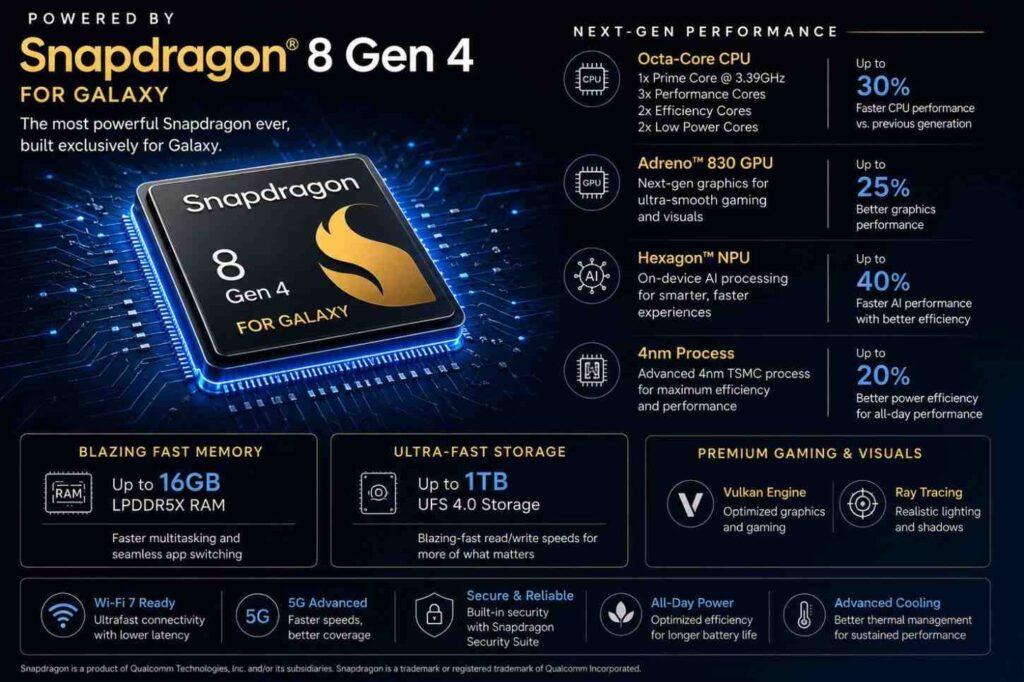
samsung galaxy z fold 8 Under the hood, the Galaxy Z Fold 8 runs on Qualcomm’s Snapdragon 8 Elite Gen 5 for Galaxy chipset — the same processor family powering Samsung’s current Galaxy S26 flagships. That means you’re getting genuine flagship-level performance, not a scaled-down “foldable tax” version of last year’s chip.
Key performance specs include:
- Chipset: Snapdragon 8 Elite Gen 5 for Galaxy
- RAM: 12GB standard configuration
- Storage: 256GB, 512GB, or 1TB, with no microSD expansion
- Battery: 4,800mAh
- Charging: Fast wired and wireless charging support, with Qi2 Ready wireless compatibility
The 4,800mAh battery is a solid capacity for a foldable this thin, though it’s worth noting the Galaxy Z Fold8 Ultra ships with a larger 5,000mAh cell, since it doesn’t have to fit around the wider chassis Samsung engineered for the standard model. As always with Samsung foldables, don’t expect a charger in the box — you’ll need your own USB-C PD-compatible charger to hit the fastest charging speeds.
Camera System: How the Z Fold 8 Shoots
samsung galaxy z fold 8 Camera hardware is one area where the standard Galaxy Z Fold 8 clearly differs from its Ultra sibling. Rather than chasing the highest megapixel count, Samsung opted for a simplified dual-camera setup on the Z Fold 8:
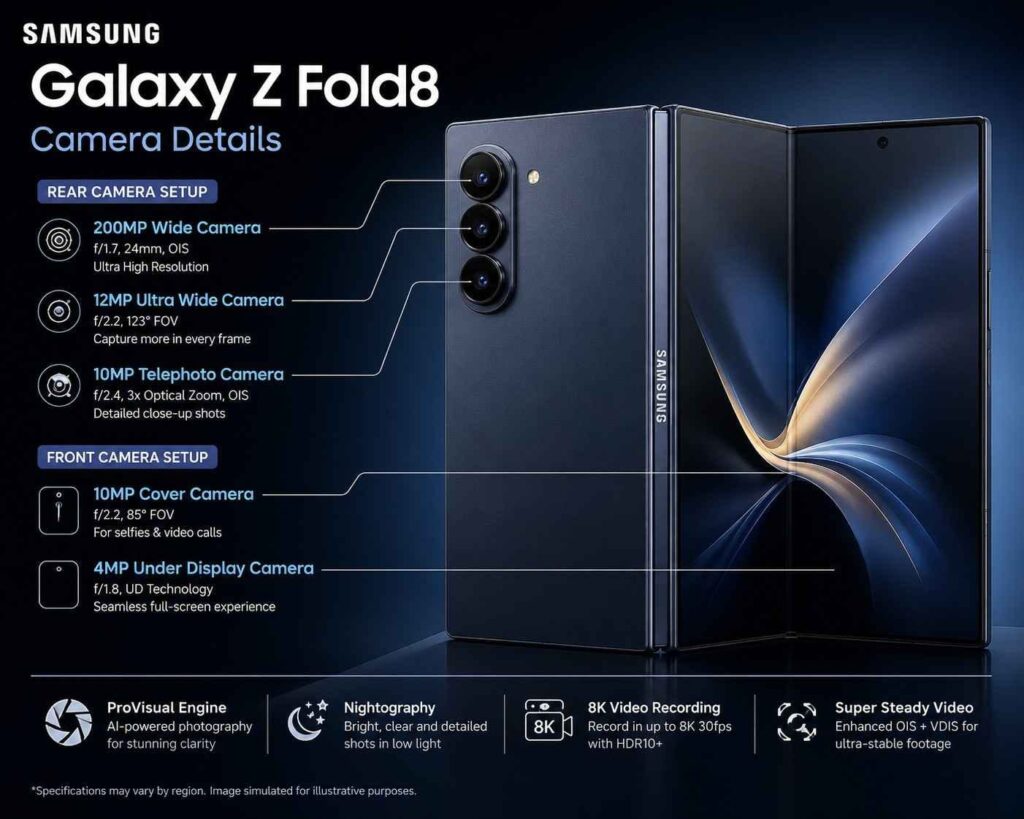
- Main camera: 50MP with an f/1.8 aperture and optical image stabilization
- Ultra-wide camera: 50MP with an f/1.9 aperture
- Cover screen selfie camera: 10MP
- Inner display selfie camera: 10MP
Notice there’s no dedicated telephoto lens here — that’s reserved for the pricier Galaxy Z Fold8 Ultra, which packs a triple-camera system built around a 200MP main sensor. What the Z Fold 8 lacks in zoom range, it makes up for with a genuinely strong ultra-wide sensor that matches its main camera’s resolution, which should mean noticeably better detail and low-light performance in wide shots than previous Fold generations offered.
Video capabilities remain flagship-grade, with support for high-resolution recording and Samsung’s usual computational photography tricks for stabilization and color accuracy, both when the phone is unfolded and when you’re shooting quickly from the cover screen.
Software and Galaxy AI Features
The Galaxy Z Fold 8 launches with One UI 9 running on top of Android 17, and Samsung’s Galaxy AI suite is more deeply woven into the experience than ever. Expect the usual lineup of AI-powered tools: smarter multitasking suggestions, live translation, photo editing assistance, and contextual features that take advantage of the large inner display for split-screen work.
Samsung DeX also carries over, letting you connect the phone to an external monitor for a desktop-style experience — a feature that makes a lot more sense now that the wider display format mirrors typical laptop and monitor proportions more closely than older Fold models did.
On the support side, Samsung has committed to lengthy software update cycles on its recent flagships, and the Galaxy Z Fold 8 is expected to follow that same long-term update policy, which is a meaningful factor if you’re planning to hold onto a phone this expensive for several years.
Flex Mode and Multitasking
Flex Mode — the feature that lets apps split into a top-and-bottom layout when the phone is partially folded — continues to be refined here, with more apps optimized to take advantage of the wider hinge angle range this generation offers.
Galaxy Z Fold 8 vs Galaxy Z Fold8 Ultra
With two big-screen foldables in Samsung’s lineup this year, the obvious question is which one actually makes sense for you.
| Feature | Galaxy Z Fold 8 | Galaxy Z Fold8 Ultra |
| Design | Shorter, wider “passport” shape | Tall, narrow book-style shape |
| Starting price | Around $1,899 | Around $2,099 |
| Rear cameras | Dual 50MP + 50MP | Triple, led by 200MP main sensor |
| Battery | 4,800mAh | 5,000mAh |
| Chipset | Snapdragon 8 Elite Gen 5 for Galaxy | Snapdragon 8 Elite Gen 5 for Galaxy |
Which One Should You Buy?
If photography and zoom range matter most to you, or you simply prefer the classic tall Samsung Galaxy Fold silhouette, the Galaxy Z Fold8 Ultra is worth the extra money. But if you want the more modern, wider foldable experience — better suited to video, browsing, and one-handed use on the cover screen — and you’d rather save a couple hundred dollars, the standard Galaxy Z Fold 8 is the smarter buy for most people. It’s also worth remembering that the Ultra’s higher price buys you a meaningfully stronger camera setup, so heavy photographers shouldn’t skip that comparison.
Frequently Asked Questions
Is the Samsung Galaxy Z Fold 8 worth buying?
For anyone who wants a genuine tablet-and-phone hybrid without compromising much on performance, yes. It runs a current flagship chipset, offers a bright, spacious inner display, and starts a couple hundred dollars cheaper than the Ultra model. It’s an easy recommendation for people upgrading from a Galaxy Z Fold 5 or earlier, though owners of last year’s Z Fold 7 may find the jump less essential.
How much does the Samsung Galaxy Z Fold 8 cost?
The Galaxy Z Fold 8 starts at approximately $1,899 for the base 256GB storage configuration, with higher prices for the 512GB and 1TB versions.
What’s the difference between the Galaxy Z Fold 8 and the Galaxy Z Fold8 Ultra?
The Galaxy Z Fold 8 has a new shorter, wider design, a simpler dual-camera system, and a lower starting price. The Galaxy Z Fold8 Ultra keeps the traditional tall Fold shape, adds a third telephoto camera lens and a 200MP main sensor, and includes a slightly larger battery — for about $200 more.
Does the Galaxy Z Fold 8 support S Pen?
S Pen support has been an inconsistent feature across recent Fold generations after being dropped for thinner designs. If you rely heavily on stylus input, it’s worth checking Samsung’s official specifications sheet before buying, since support can vary between the Fold8 and Fold8 Ultra models.
When can I actually buy the Galaxy Z Fold 8?
Samsung announced the phone on July 22, 2026, with pre-orders opening the same day and general retail availability following within a couple of weeks, in line with how Samsung has rolled out past Galaxy Z Fold launches.
Final Thoughts: Should You Buy the Galaxy Z Fold 8?
The Samsung Galaxy Z Fold 8 isn’t just a spec bump — it’s Samsung rethinking what a Samsung Galaxy Fold should look and feel like in 2026. The wider, shorter design makes the phone genuinely easier to use one-handed while still delivering that tablet-sized inner display foldable fans love. Paired with flagship-level performance, a bright adaptive display, and a starting price that undercuts the Ultra model by $200, it’s a strong option for anyone ready to make the jump into foldables — or upgrade from an older Galaxy Z Fold.
If you’ve been on the fence about foldable phones, this is one of the most approachable entry points Samsung has ever offered. Compare it against the Galaxy Z Fold8 Ultra based on your camera needs and budget, check current trade-in deals from Samsung and your carrier, and decide which shape fits how you actually use your phone. Either way, the next chapter of the Samsung Galaxy Fold story is here — and it’s worth a serious look before you buy your next phone.
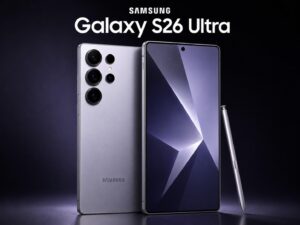
If you’re looking for another premium Samsung smartphone, check out our Samsung Galaxy S26 Ultra for its camera, performance, and AI features.