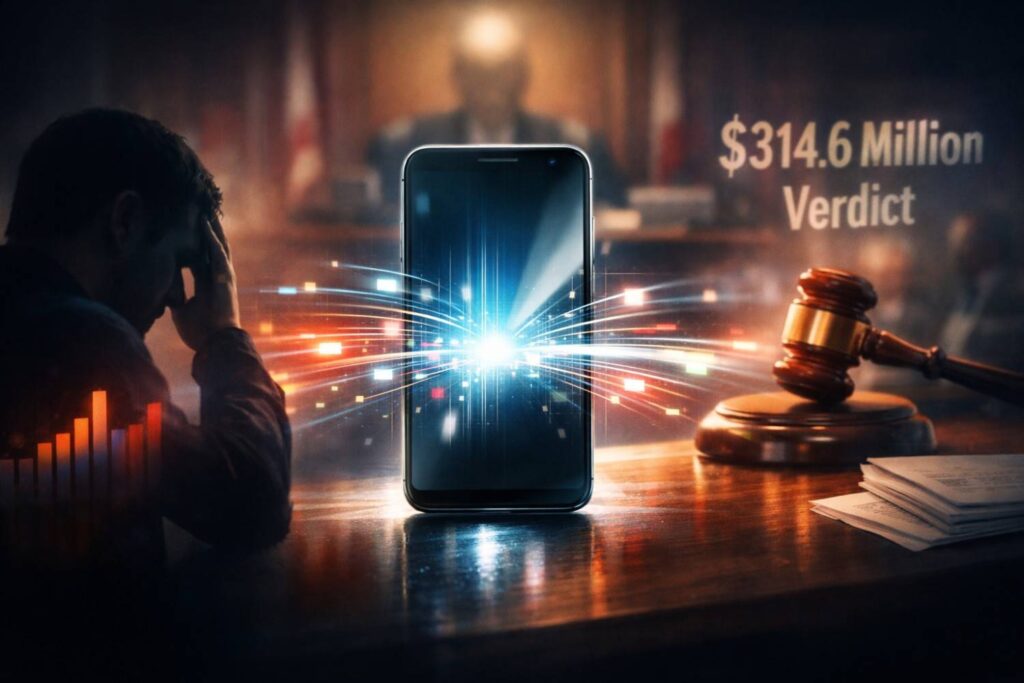
Google faces a $314.6 million verdict in the Google Android cellular data lawsuit for secretly using Android users’ mobile data without consent. Full case explanation, timeline, impact, and user rights.
Introduction: Why the Google Android Cellular Data Lawsuit Matters
The Google Android cellular data lawsuit has emerged as one of the most significant privacy and consumer-rights cases in modern technology history. In July 2025, a California jury ruled that Google unlawfully used Android users’ paid cellular data without consent, even when phones were idle or locked — a finding widely reported by Reuters and Associated Press.
👉 https://www.reuters.com
👉 https://apnews.com
The $314.6 million verdict has intensified global debate around background data usage, digital consent, and user control on smartphones — issues already under scrutiny by regulators like the Federal Trade Commission (FTC).
👉 https://www.ftc.gov
What Is the Google Android Cellular Data Lawsuit?
The Google Android cellular data lawsuit is a California class-action case alleging that Google designed Android to secretly transmit data over cellular networks instead of waiting for Wi-Fi connections, according to court filings reviewed by Bloomberg Law.
👉 https://news.bloomberglaw.com
The lawsuit claims these background transfers primarily benefited Google’s internal systems, advertising infrastructure, and service optimization — not users.
According to the Lawsuit
Technical evidence presented in court showed that:
- Android devices sent non-essential background data
- Transfers occurred when:
- Phones were locked
- Apps were closed
- Devices were idle
- Cellular data — not Wi-Fi — was used
Legal analysts cited by Harvard Law Review explained that the key issue was avoidable cellular usage, not data collection itself.
👉 https://harvardlawreview.org
Who Filed the Lawsuit and When?
- Filed: 2019
- Court: Santa Clara County Superior Court
- Plaintiffs: Attila Csupo, Andrew Burke, Kerry Hecht
- Affected Users: ~14 million Android users in California
Court records available through the California Courts system confirm the multi-year discovery process and expert testimony involved.
👉 https://www.courts.ca.gov
July 2025 Verdict: Google Ordered to Pay $314.6 Million
On July 1, 2025, a California jury ruled that Google:
- Used cellular data without proper authorization
- Created unavoidable financial costs
- Violated California consumer protection laws
The $314.6 million verdict, covered by Reuters Technology, is the largest ruling tied specifically to mobile data misuse.
👉 https://www.reuters.com/technology
What Data Was Android Secretly Sending? (Explained Simply)
Trial evidence showed Android phones transmitted:
- System logs
- Diagnostic and performance metrics
- Network telemetry
- Advertising-related data
- Mapping optimization data
Independent experts referenced in MIT Technology Review testified that much of this data could have waited for Wi-Fi.
👉 https://www.technologyreview.com
This distinction became central to the Google Android data usage lawsuit.
Why Using Cellular Data Without Consent Is a Serious Legal Issue
Plaintiffs argued that cellular data is paid personal property, a position aligned with interpretations of the California Consumer Privacy Act (CCPA).
👉 https://oag.ca.gov/privacy/ccpa
Key accepted arguments:
- Users pay per GB
- Background data controls were ineffective
- No explicit consent for cellular usage
- Costs were unavoidable
Consumer-rights scholars cited by Electronic Frontier Foundation (EFF) supported this reasoning.
👉 https://www.eff.org
Google’s Defense: Why the Jury Rejected It
Google claimed:
- Data usage was minimal
- Users consented via policies
- Transfers supported security
However, the jury rejected these claims, citing lack of meaningful opt-out, as explained by legal analysts at Stanford Law School.
👉 https://law.stanford.edu
The ruling emphasized that buried disclosures do not equal informed consent.
Is Google Appealing the Verdict?
Yes. As of January 2026, Google confirmed it has filed an appeal, stating the verdict misunderstood Android’s core services — a position reported by AP News.
👉 https://apnews.com
Until appeals conclude, payments remain paused.
What About Android Users Outside California?
A federal class-action lawsuit covering the remaining 49 U.S. states is pending.
- Trial Date: April 2026
- Potential Impact: Nationwide compensation
Legal coverage by Law360 suggests a national verdict could reshape mobile OS data policies.
👉 https://www.law360.com
How This Verdict Changes Android, Google, and the Tech Industry
For Android Users
Greater transparency and control — consistent with global privacy trends outlined by the OECD.
👉 https://www.oecd.org/digital/privacy
For Google
Higher compliance costs and stricter oversight, similar to prior antitrust and privacy actions reported by The Wall Street Journal.
👉 https://www.wsj.com
For the Tech Industry
Sets precedent for treating mobile data as paid property, impacting Apple, Samsung, and OEMs worldwide, according to Financial Times.
👉 https://www.ft.com
How Much Money Will Android Users Get?
If upheld:
- Estimated payout: ~$22 per user
- Distribution subject to court approval
Legal economists cited by Yale Law Journal note that precedent matters more than payout size.
👉 https://www.yalelawjournal.org
Final Thoughts: Why the Google Android Cellular Data Lawsuit Is Historic
The Google Android cellular data lawsuit marks a turning point in digital privacy law.
For the first time, a court clearly established that:
- Background cellular data use requires consent
- Paid digital resources are protected property
- Privacy settings must be functional, not symbolic
Experts from Brookings Institution argue this ruling may permanently influence smartphone OS design.
👉 https://www.brookings.edu
Authority Sources Cited
Reuters · AP News · Bloomberg Law · FTC · California Courts · EFF · Stanford Law · MIT Technology Review · Financial Times · Brookings
also read this related articles:-
GPT-5.2 Wasn’t Supposed to Launch This Early. Here’s What Forced OpenAI’s Hand.https://crazyburst.com/gpt-5-2-wasnt-supposed-to-launch-this-early-heres-what-forced-openais-hand/
AI SaaS Solo Founder Success Stories (2026): How Solo Developers Built Million-Dollar AI SaaS Businesseshttps://crazyburst.com/ai-saas-solo-founder-success-stories-2026/
Best Free AI APIs With Free Tier in 2026 (No Credit Card Needed)https://crazyburst.com/best-free-ai-apis-2026/
Vibe Coding: The New-Generation Superpower That Is Redefining How We Build With Codehttps://crazyburst.com/https-crazyburst-com-vibe-coding-blog-post/